A Scene I Still Remember
I know this is not a movie blog, but I hope you will bear with me for a moment.
Around Christmas 2006, I watched Charlie and the Chocolate Factory, the 2005 film starring Johnny Depp as Willy Wonka. I had never seen the original 1971 film, so I was discovering the story for the first time.
I really enjoyed the movie. It was entertaining, imaginative and, in many ways, quite magical. But looking back, what surprises me is that the part I remember most clearly has very little to do with Willy Wonka or his famous chocolate factory.
It is the story of William Bucket, Charlie’s father, who worked at a local toothpaste factory.
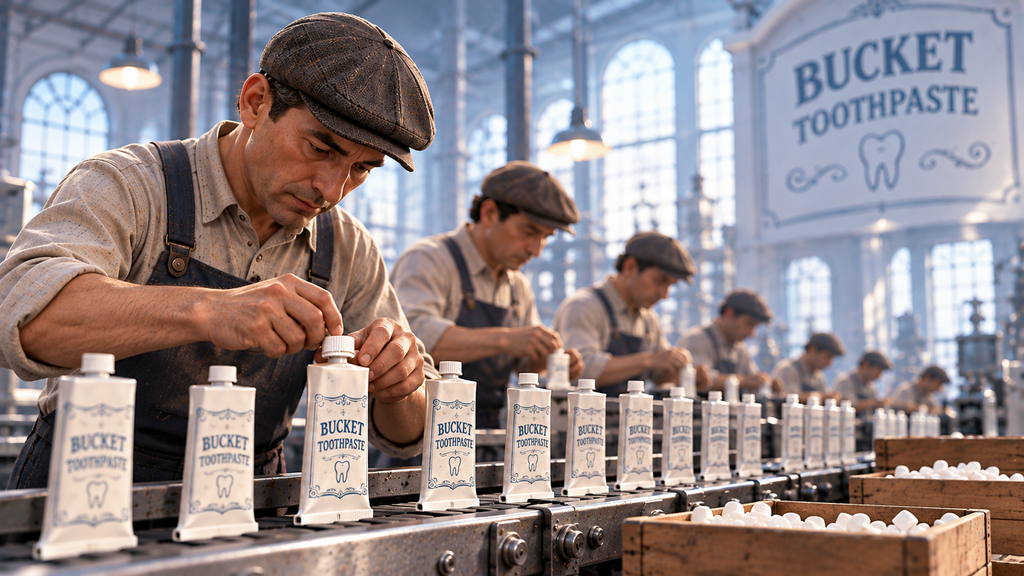
His story was only a small part of the film, yet something about it stayed with me. Nearly 20 years later, I can still remember how I felt watching what happened to him and, more importantly, how his circumstances eventually changed.
With artificial intelligence becoming part of our everyday lives, that memory feels more relevant today than it did back then.
The Machine That Replaced William Bucket
William Bucket worked at a toothpaste factory, screwing caps onto tubes. The work was repetitive, but it helped support a family that was already struggling to make ends meet.
Then the factory introduced a machine that could do his job. William was no longer needed.
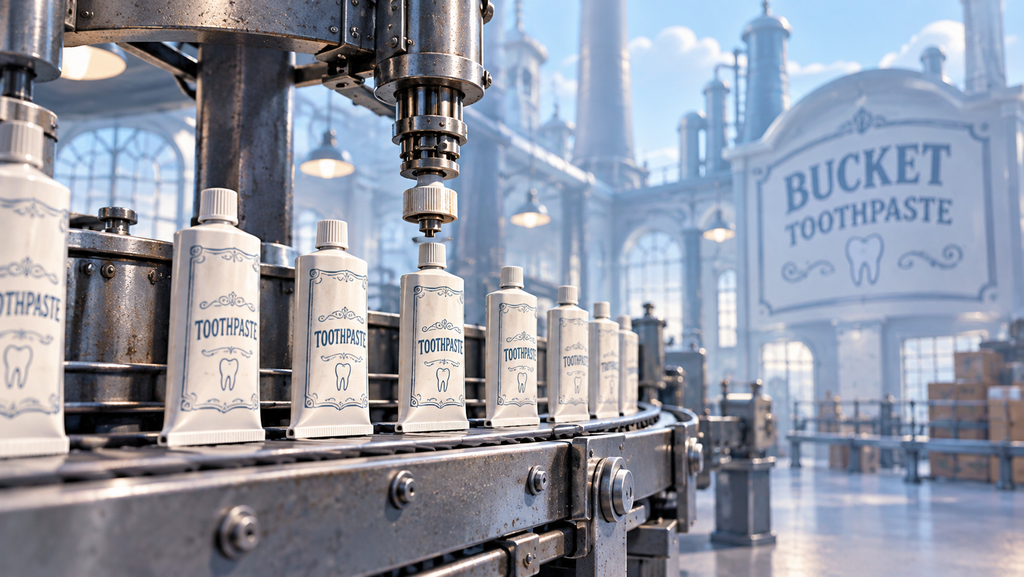
I remember feeling sad for him. Here was a father trying to provide for his family, suddenly out of work because a machine could do the same task.
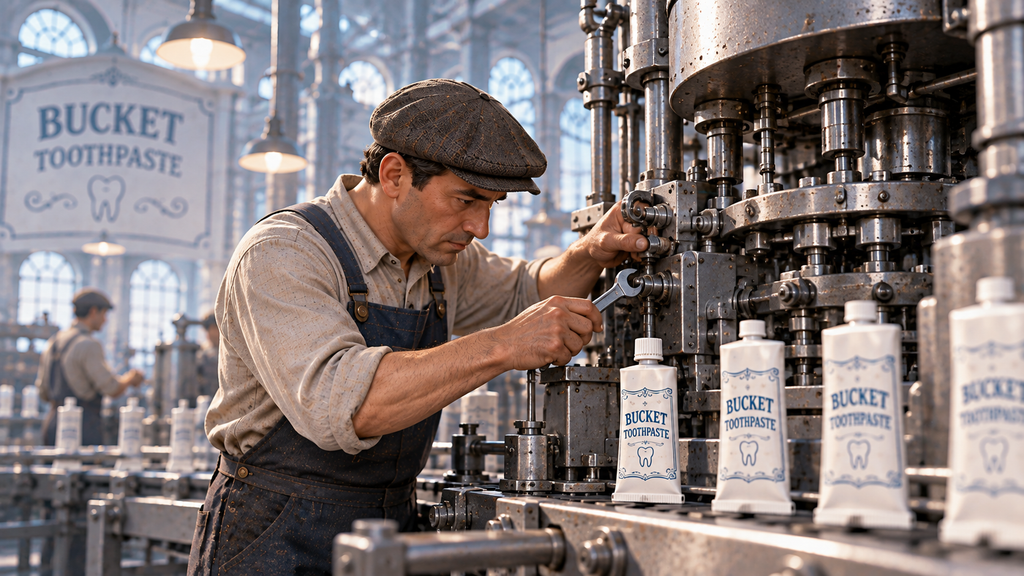
But the story took an unexpected turn. Later in the film, William returned to the factory, not to screw caps onto tubes, but to repair and maintain the machine that had replaced him.
His old job had gone. The technology was still there. Yet he had found a new way to contribute.
At the time, I was simply pleased that things had worked out for William and his family. I did not expect to be thinking about that scene two decades later.
Twenty Years Later, Here We Are Again
Nearly 20 years later, we seem to be standing at another crossroads in technology. This time, it is artificial intelligence. Some people are excited by what AI can do; others worry about what it will mean for their jobs and livelihoods.
Those concerns are understandable. AI can already perform tasks that once required people, from writing and analysing information to supporting customer service and software development. It is changing how work gets done.
I think back to William and the toothpaste factory. The machine made the factory more efficient, but it also cost him his job. AI may bring similar challenges on a much wider scale. Some tasks will disappear, jobs will change and new opportunities will emerge. The transition will not be easy or fair for everyone.
Still, losing a task is not always the same as losing the ability to contribute. That is what William’s story reminds me of.
The Opportunity Is in Adapting
William did not return to the factory to do his old job. He found a way to work with the technology that had replaced him. There is a useful lesson in that.
As AI becomes more capable, we will need to learn new skills and rethink how we work. That does not mean everyone must become a programmer or an AI expert. For many of us, it means learning to use new tools well and combining them with the knowledge and experience we already have.
In ecommerce, AI can help create content, support customer service, recommend products and analyse data. But understanding customers, making commercial decisions and solving operational problems still call for human judgement. The opportunity is to use AI to do better work, not simply to do the same work faster.
Adapting will not be easy for everyone. Employers also have a responsibility to help people develop new skills. For individuals, curiosity and a willingness to learn are good places to start.
Final Thoughts
When I watched Charlie and the Chocolate Factory around Christmas 2006, I had no idea that William Bucket’s story would stay with me for almost 20 years. Yet here we are, facing another wave of technological change.
We cannot know exactly how AI will reshape our jobs. Some changes will be welcome; others will be difficult. William’s story has a happy ending, and real life may not be so neat. But it offers a reason to look beyond the fear of what technology might take away and consider what we could learn to do next.
The future may not be about protecting the work we do today, but preparing ourselves for the work we could do tomorrow.